国产精品自在拍首页视频-中文字幕免费无码专区-免费人成在线观看网站品爱网-一本色综合网久久-高潮毛片无遮挡高清视频播放

Welcome to the official website of Ningbo Hexin! Tel: +86 18312962656 E-mail: hexinmosu@163.com

Aluminum Die Casting FactoryCreate the ultimate user experience with technology services
Global Service Hotline+86 18312962656
A383.0 (ADC12 Modified) Comprehensive Guide to Die-Cast Aluminum Alloys: Composition Optimization, Performance Benefits and Selection Strategies

A383.0 (ADC12 Modified) Comprehensive Guide to Die-Cast Aluminum Alloys: Composition Optimization, Performance Benefits and Selection Strategies

2026-02-01

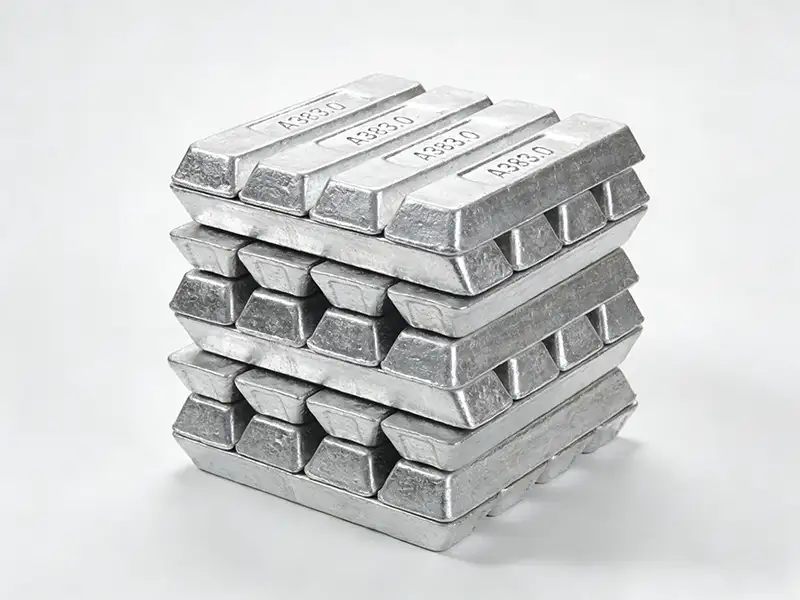
As an exemplary “easy-to-machine” die-cast aluminum alloy according to the ASTM standard, A383.0 is known for its excellent casting properties, excellent dimensional stability, and industry-leading machinability. The alloy is essentially an optimized version of the classic alloy A380.0. By adjusting the silicon and copper content and strictly controlling the ratio of iron to zinc, the alloy maintains good mechanical properties while significantly improving thin-wall filler capacity and subsequent machining efficiency, making it ideal for the production of large-volume die castings requiring extensive drilling, tapping or complex machining. A383.0 Corresponding Standards and Grades A383.0 Aluminum Alloy Composition Table (Based on ASTM B85 Typical Requirements) Element Content Range (wt%) Functional Role Silicon (Si) 9.5-11.5 A core element that provides excellent fluidity. Often treated by densification...

R14-T6 High Strength Cast Aluminum Alloy Comprehensive Guide: Harsh Composition, Precision Heat Treating and Aerospace Applications

R14-T6 High Strength Cast Aluminum Alloy Comprehensive Guide: Harsh Composition, Precision Heat Treating and Aerospace Applications

2026-01-31

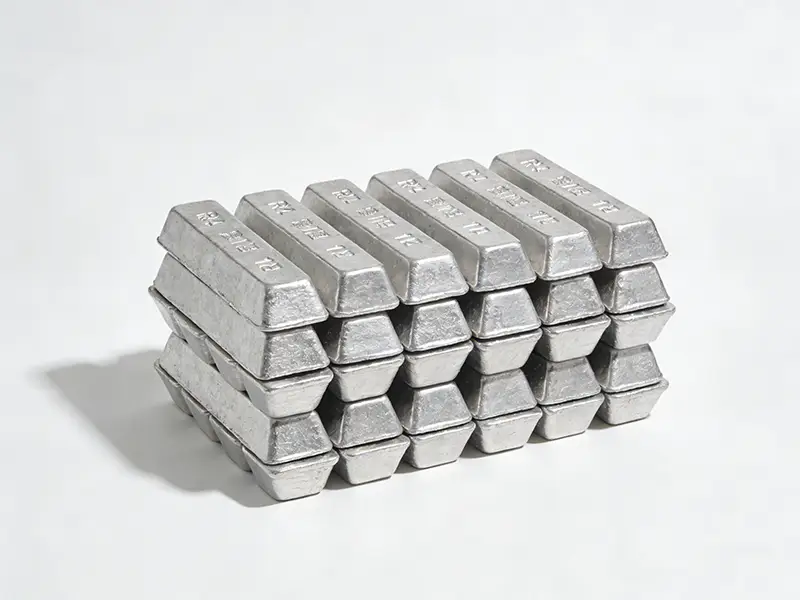
As a typical representative of the ZL201 series of high-strength cast aluminum alloys independently developed by China at a specific period in history and widely used in national defense and high-end equipments, R14 is an Aluminum-Copper-Manganese (Al-Cu-Mn) alloy known for its extremely high room-temperature strength, excellent heat resistance and good weldability. Strengthened by multiple composite reinforcement, the mechanical properties of this alloy in cast state and after heat treatment, especially the tensile strength, have long been at the top level of domestic casting aluminum alloys, and it is specially designed for the manufacture of high-quality castings that are subject to high loads, high working temperatures, and complex structures. R14 Corresponding Standards and Grades R14 (ZL201A) Aluminum Alloy Composition Table (Typical Range) Element Content Range (wt%) Functional Role Copper (Cu) 4.8-5.3 Core Strengthening Element. Formation θ' (Al?Cu)...

ADC1 Die-Cast Aluminum Alloy: A High-Silicon General Purpose Benchmark, Explaining the Balance Between Processing Excellence and Economy

ADC1 Die-Cast Aluminum Alloy: A High-Silicon General Purpose Benchmark, Explaining the Balance Between Processing Excellence and Economy

2026-01-27

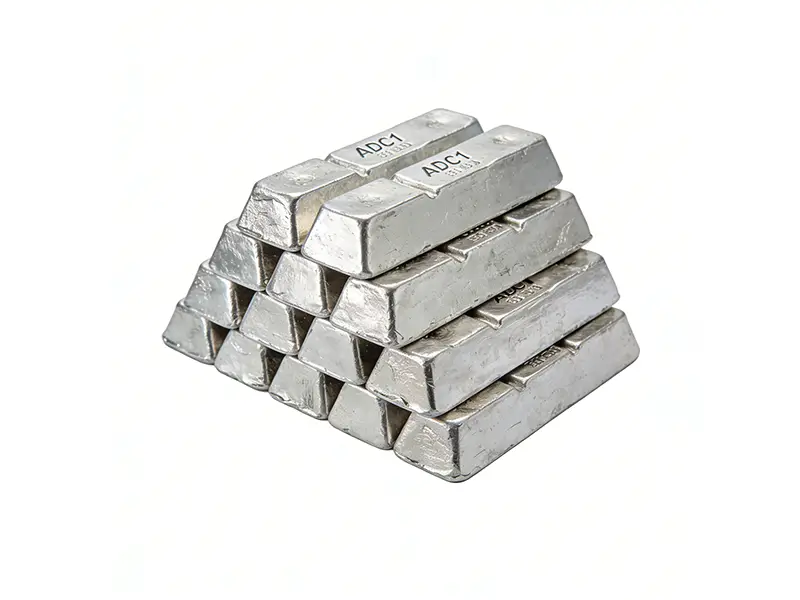
As the Japanese Industrial Standard (JIS) benchmark for high silicon content general purpose die casting aluminum alloys, ADC1 is one of the most widely used die casting materials for its excellent casting fluidity, good dimensional stability and economy. The alloy is a typical near eutectic aluminum-silicon alloy, through the high silicon (Si) and the right amount of copper (Cu) with the combination of providing reliable mechanical properties, while maximizing the optimization of die casting production efficiency and part qualification rate, is the production of large quantities, medium strength, complex shape of thin-walled parts of the industry's main force. ADC1 Corresponding Standards and Grades ADC1 Aluminum Alloy Composition Table (Based on JIS H 5302 Typical Requirements) Element Content Range (wt%) Functional Role Silicon (Si) 11.0-13.0 Core element that provides excellent casting fluidity, low shrinkage, and good resistance to thermal...

A comprehensive guide to ADC3 (Al-Si-Mg) die-cast aluminum alloys: low-silicon design, heat treatment potential and high-end application scenarios

A comprehensive guide to ADC3 (Al-Si-Mg) die-cast aluminum alloys: low-silicon design, heat treatment potential and high-end application scenarios

2026-01-23

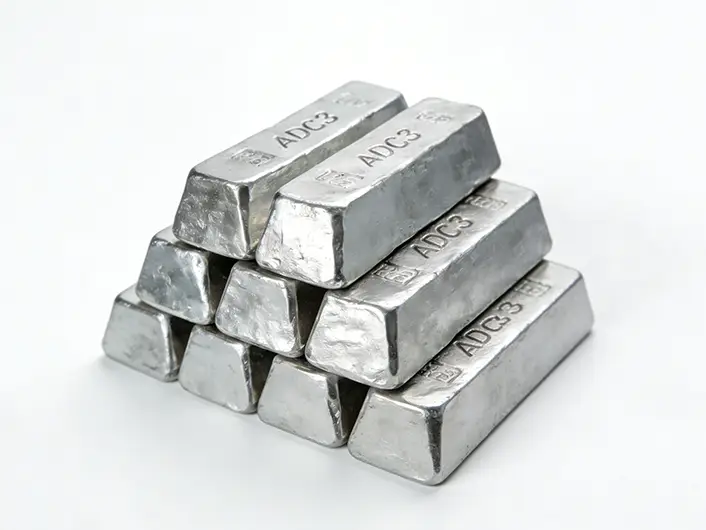
As a representative of high strength and high thermal conductivity die casting aluminum alloy in the Japanese Industrial Standard (JIS), ADC3 is known for its excellent casting performance, good mechanical strength and excellent thermal/electrical conductivity. This alloy through the unique “l(fā)ow silicon in magnesium” composition system, while maintaining good die casting processability, to achieve a better overall performance balance than traditional die casting aluminum (such as ADC12), especially suitable for the production of good heat dissipation, electromagnetic shielding and medium structural strength of thin-walled parts, in the field of communications, electronics and electrical equipment ADC3 standards and grades ADC3 Standards and Grades ADC3 Aluminum Alloy Composition Table (Based on JIS H 5302 Typical Requirements) Element Content Range (wt%) Functional Purpose Silicon (Si) 4.0-6.0 Medium to low content of silicon. Ensures basic casting fluidity while maximizing...

A360.0 Comprehensive Guide to Die-Cast Aluminum Alloys: Composition, Performance Enhancement Pathways and Industry Applications

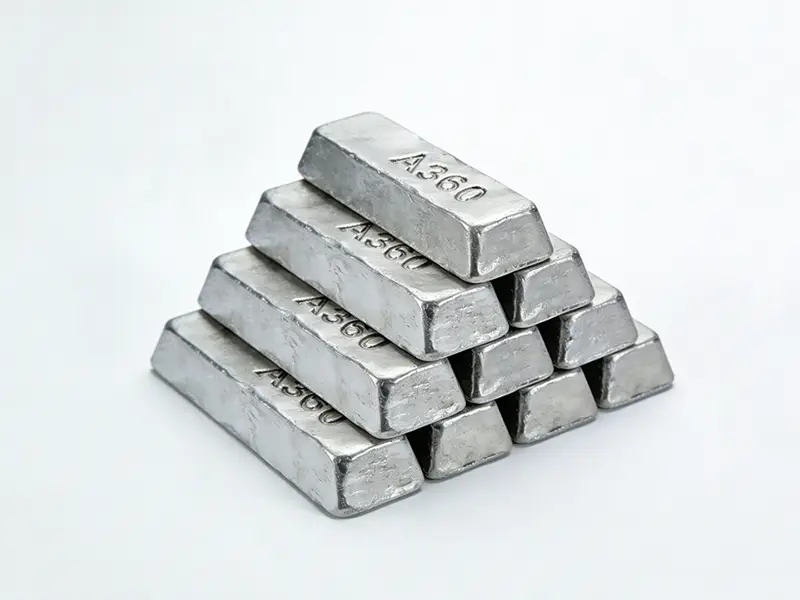
A360.0 Comprehensive Guide to Die-Cast Aluminum Alloys: Composition, Performance Enhancement Pathways and Industry Applications

2026-01-22
ZL108 Cast Aluminum Alloy: How Phosphorus Metamorphism and T6 Heat Treatment Shape Top Piston Materials

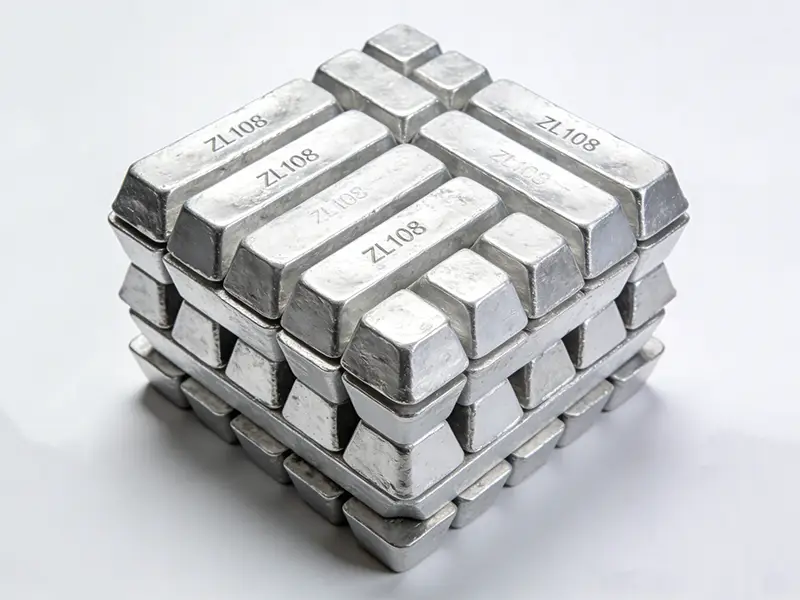
ZL108 Cast Aluminum Alloy: How Phosphorus Metamorphism and T6 Heat Treatment Shape Top Piston Materials

2026-01-20

As an outstanding representative of cast aluminum alloys for pistons, ZL108 (ZAlSi12Cu2Mg1) is known for its excellent high-temperature strength, low coefficient of thermal expansion, and outstanding wear and heat resistance. The alloy is a typical perovskite aluminum-silicon alloy, optimized for piston components subjected to severe alternating thermal and mechanical loads in engine cylinders through complex alloying design and rigorous heat treatment, achieving a precise balance between high-temperature dynamic performance and durability. The corresponding national grade for ZL108 is ZAlSi12Cu2Mg1. ZL108 Aluminum Alloy Composition Table Element Content Range (wt%) Functional Role Silicon (Si) 11.0-13.0 Hypereutectic content. Provides low thermal expansion and high wear resistance, but the incipient silicon phase needs to be refined by phosphorus (P) metamorphism. Copper (Cu) 1.0-2.0 Main high-temperature strengthening element...

ADC0 Aluminum Alloy: A Reverse Definition of “Alloying”, an Extreme Sample of Die Casting Demonstrating Purity and Frailty

ADC0 Aluminum Alloy: A Reverse Definition of “Alloying”, an Extreme Sample of Die Casting Demonstrating Purity and Frailty

2026-01-19

ADC0 aluminum alloy is a unique material characterized by extremely low alloy content and high purity of aluminum as a base and comparison standard for die-cast aluminum alloys in the Japanese Industrial Standards (JIS). It is not used for the manufacture of high-strength structural parts, but as a “specimen” or “base alloy” mainly used for scientific research, comparison of alloy development, and testing of the ultimate performance of the die-casting process itself, and has an irreplaceable value in understanding the intrinsic properties of aluminum alloys and the effects of impurities. It has irreplaceable value in understanding the nature of aluminum alloys and the influence of impurities. ADC0 Standards and Grades ADC0 Aluminum Alloy Composition Table (based on JIS H 5302 typical requirements) Element Content Requirement (wt%, max.) Function and Significance Silicon (Si) ≤ 0.30 Non-alloying element. Extremely low levels give poor casting fluidity, in extreme contrast to ADC10/12, etc. Iron (Fe) ≤ 0.50...

High-silicon aluminum-silicon alloy ZL102: composition, properties and non-heat treatable characteristics in detail

High-silicon aluminum-silicon alloy ZL102: composition, properties and non-heat treatable characteristics in detail

2026-01-15

As one of the alloys with the highest silicon content and the best casting properties in the cast aluminum alloy family, ZL102 (ZAlSi12) is known for its excellent flowability, very low shrinkage and excellent resistance to hot cracking. The alloy is classified as a simple silica-aluminum alloy, which is not heat-treatable due to the absence of other reinforcing elements, and is typically used for casting parts with extremely complex shapes and large differences in wall thicknesses, but with low absolute strength requirements, reaching the pinnacle of casting manufacturability and economy. The corresponding national grade of ZL102 is ZAlSi12. ZL102 Aluminum Alloy Composition Table Element Content Range (wt%) Function Silicon (Si) 10.0-13.0 The core element, which greatly improves the fluidity, reduces shrinkage, and is the key to obtaining excellent casting performance. Aluminum (Al) Balance Base material. Iron (Fe) ≤...

ZL104 casting aluminum alloy technical details: composition, properties and industry applications

ZL104 casting aluminum alloy technical details: composition, properties and industry applications

2026-01-14

As one of the most widely used alloys in the family of cast aluminum alloys, ZL104 (ZAlSi9Mg) is known for its excellent casting properties, good airtightness and high overall mechanical properties. The alloy is particularly suitable for sand casting, metal casting and investment casting to produce parts with complex shapes, requiring airtightness or medium loads, achieving a good balance between process adaptability and performance reliability. The corresponding national grade of ZL104 is ZAlSi9Mg. ZL104 Aluminum Alloy Composition Table Element Content Range (wt%) Function Silicon (Si) 8.0-10.5 Improves casting fluidity, reduces the tendency of hot cracking, and is the main alloying element. Magnesium (Mg) 0.17-0.35 Key reinforcing element, forms Mg?Si phase with silicon, significantly improves strength through heat treatment. Manganese (Mn) 0.2-0.5 Neutralizing...

Comparison table of cast aluminum alloy grades by country

Comparison table of cast aluminum alloy grades by country

2026-01-12

Casting aluminum alloy is an important material widely used in industrial fields, and the naming of its grades varies from country to country, which brings inconvenience to international technical exchanges and material selection. This table systematically compiles the casting aluminum alloy grade relations of China (GB), international standards (ISO), the United States (AA/SAE), Europe (EN/DIN), Japan (JIS), Russia (ГОСТ) and other major standards, covering the major alloy series such as Al-Si, Al-Cu, Al-Mg, Al-Zn, etc., which is aimed at providing quick references for engineering design, trade purchasing and standards conversion. The purpose is to provide quick reference for engineering design, trade procurement and standards conversion. In the table, “~” denotes approximate correspondence, “-” denotes no direct correspondence, and the content in parentheses is a note. Please combine with the latest standards and specific technical requirements to make a comprehensive judgment when using in practice. We hope this table can facilitate your work. Table 1 Al-Si (...


YL113 (YL113A) Aluminum Alloy Technical Specification Full Analysis

YL113 (YL113A) Aluminum Alloy Technical Specification Full Analysis

2026-01-11

A cost-effective alloy for the die casting industry, YL113 aluminum alloy is popular for its excellent castability and good mechanical properties. The alloy is particularly well suited to the production of high volume parts of medium strength and complexity, providing an excellent balance between cost and performance. The corresponding national grade for Yl113 is YZAlSi11Cu3. YL113 Aluminum Alloy Composition Table Element Content Range (wt%) Functional Role Aluminum (Al) Balance Matrix material, provides structural foundation Silicon (Si) 9.0-11.0 Improves fluidity, reduces shrinkage defects Copper (Cu) 1.8-2.5 Enhances strength and hardness Fe ≤ 0.9 Improves die casting performance, prevents die sticking Manganese (Cu) 1.8-2.5 Enhances strength and hardness Fe ≤ 0.9 Improves die casting performance, prevents die sticking Improve die-casting performance and prevent die sticking Manganese (Mn) ≤0.5 Neutralize the harmful effects of iron Zinc (Zn) ≤1.0 Trace improve corrosion resistance YL113 Physical and Mechanical Properties Parameter Table Performance Indicators Values...

A380 aluminum alloy composition and physical properties analysis

A380 aluminum alloy composition and physical properties analysis

2025-05-08

As a highly efficient solution for die casting, A380 is the most popular die casting aluminum because it combines the properties of easy casting, ease of machining, and good thermal conductivity. It has a high degree of variability, load-bearing capacity, and resistance to high-temperature splitting. Although Type A380 has always been considered easy to machine, it is slightly rough due to its high silicon content. It is utilized in a wide variety of products including motor equipment chassis, engine mounts, gearboxes, furniture, generators, and hand tools. The following is a visual presentation of its core technical parameters through a comparison of professional data: A380 Aluminum Alloy Composition Table Element Content Range (wt%) Function Aluminum (Al) 85.0-89.5 Matrix material to ensure a lightweight base Silicon (Si) 7.5-9.5 Enhances mobility and wear resistance Copper (Cu) 3.0-4.0 Enhances high...

A356 Aluminum Alloy Comprehensive Guide: Properties, Applications and FAQs

A356 Aluminum Alloy Comprehensive Guide: Properties, Applications and FAQs

2025-04-30

The most widely used material for modern automotive cast aluminum alloys is the American Society for Testing and Materials (ASTM) grade A356 alloy, which is equivalent to China's ZL101A, Japan's AC4CH, Germany's AlSi7Mg, France's A-S7G03, and Russia's Aл9-1. In addition to the A356 alloy, Germany uses AlSi9Mg, AlSi10Mg, AlSi11Mg, and France uses A-S11G and A-S12.5. France also uses A-S11G, A-S12.5 . These high Si alloys are not heat-treated, they have good liquid mobility, strong shrinkage capacity, good casting performance, casting defects. But the mechanical properties and machining process performance is not as good as A356 alloy. Chemical Composition Element Symbol Component Range (Mass %, %) Remarks (Maximum Allowable or Other Requirements) Si 6.5 - 7.5 Primary alloying element, improves fluidity Mg 0.25 - 0.45 Enhances strength and response to heat treatment Fe ≤ 0.20 Miscellaneous...

ADC12 Die-Cast Aluminum Alloy Comprehensive Guide: Compositional Properties, Mechanical Properties and Industry Applications

ADC12 Die-Cast Aluminum Alloy Comprehensive Guide: Compositional Properties, Mechanical Properties and Industry Applications

2025-04-14

ADC12 (Japan JIS standard 12 aluminum) is a high-performance Al-Si-Cu die-cast aluminum alloy, which implements the JIS H 5302-2000 standard. The alloy is known for its excellent casting fluidity, good machinability and high dimensional stability, and is particularly suitable for the production of complex thin-walled components. Its typical composition (Si 9.6-12.0%, Cu 1.5-3.5%) ensures that the material combines good strength, heat and corrosion resistance while keeping production costs low. In the automotive industry, ADC12 is widely used in the manufacture of key components, including cylinder head covers, various types of sensor housings, engine mounts, transmission components and motor housings and other structural parts. It is one of the most common materials used in the die casting industry. Material Composition JIS Standard Copper Silicon mg Zinc Iron Manganese Ni Sn Aluminum ADC...

Telephone

Service hotline:
+86 18312962656

whatsapp
wechat
Connection

Email: hexinmosu@163.com