














YL113 (YL113A) Aluminum Alloy Technical Specification Full Analysis
Date: 2026-01-11 Categories: Blog Views: 1052
A cost-effective alloy for the die casting industry, YL113 aluminum alloy is popular for its excellent castability and good mechanical properties. The alloy is particularly well suited for the production of high volume parts of medium strength and complexity, providing an excellent balance between cost and performance.
YThe corresponding national grade for l113 is YZAlSi11Cu3..
- Old national standard (GB/T 1173-1995): Casting aluminum alloy grades are expressed as?ZAlSi11Cu3The “Z” stands for “casting” and the “L” stands for “aluminum”. The "Z" stands for "casting" and the "L" stands for "aluminum".
- New national standard (GB/T 1173-2013): A nomenclature more in line with international standards (ISO) has been adopted, and the grades are expressed as follows?YZAlSi11Cu3The first “Y” stands for “Die Casting”. The "Y" at the beginning stands for "die casting".
- Industry/Enterprise Code:YL113?或?YL113A?It is the abbreviation or designation of the material widely used in the die-casting industry, enterprise standards or design manuals, and is very common.
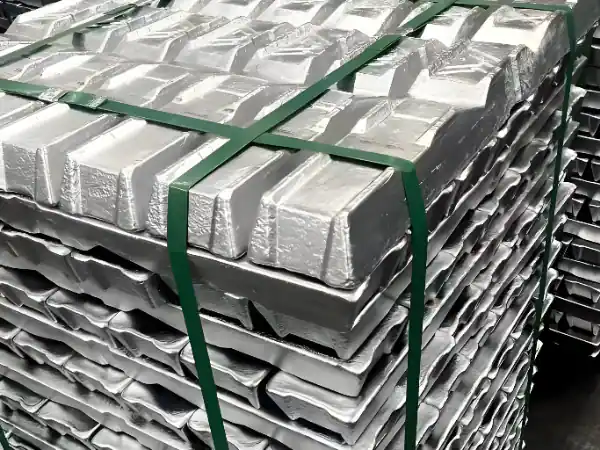
YL113 Aluminum Alloy Composition Table
| elemental | Content range (wt%) | functional role |
|---|---|---|
| Aluminum (Al) | tolerance (i.e. allowed error) | Matrix material, providing the structural foundation |
| Silicon (Si) | 9.0-11.0 | Improved flowability and reduced shrinkage defects |
| Copper (Cu) | 1.8-2.5 | Enhanced strength and hardness |
| Iron (Fe) | ≤0.9 | Improves die casting performance and prevents mold sticking |
| Manganese (Mn) | ≤0.5 | Neutralize the harmful effects of iron |
| Zinc (Zn) | ≤1.0 | Micro-improved corrosion resistance |
YL113 Physical and Mechanical Properties Parameter Table
| Performance indicators | Numerical range | Cross reference (A380) |
|---|---|---|
| intensity | 2.68-2.70 g/cm3 | 2.71 g/cm3 |
| Tensile strength (cast) | 220-250 MPa | 310-330 MPa |
| yield strength | 110-130 MPa | 150-160 MPa |
| elongation | 2.0-3.0% | 2.5-3.5% |
| Brinell hardness | 70-80 HB | 75-85 HB |
| heat conductivity | 92-96 W/(m-K) | 96 W/(m-K) |
| Coefficient of linear expansion | 21.5-22.5 μm/(m-°C) | 21.8 μm/(m-°C) |
Mechanical Performance Enhancement Path
The mechanical properties of YL113 can be systematically enhanced to meet a wider range of applications through the following combination of strategies:
- Microalloying and composition optimizationThe following are examples: strict control of iron content (≤0.7%) and addition of trace titanium (Ti: 0.1-0.15%) for grain refinement; and control of copper content at the upper end of the range (~2.5%), which significantly improves the room and high temperature strengths.
- Advanced Die Casting Process: Adoptionvacuum die casting(Vacuum degree ≤ 50mbar) can reduce the porosity to below 1%, fatigue strength enhancement 20-30%; on the thick and large parts using thelocalized extrusionThe technology effectively eliminates shrinkage holes and improves density and strength uniformity.
- heat treatment strengthening: The most cost-effective way to reinforce YL113 is toT5 manual aging(Holding at 150-180°C for 4-8 hours). After T5 treatment, its tensile strength can be increased to270-310 MPaYield strength up to180-220 MPaIt is suitable for die castings that require high strength but cannot be subjected to drastic solution treatment, while maintaining good dimensional stability.
Corresponding international grades
This material is very common both at home and abroad, and its correspondence is as follows,:
- Chinese national standard: YZAlSi11Cu3 (GB/T 1173-2013)
- international standard:AlSi11Cu3(Fe)?或?EN AC-46000?(EU standard EN 1706)
- American Standard:A383.0?(ASTM)
- Japanese Standard:AD12.1?(JIS)
Largely the same, with slight differences in practice, e.g. ADC12 vs. YL113
| characterization | ADC12 | YL113 (A383) | Impact on prices |
|---|---|---|---|
| core positioning | General purpose die casting with cost priority | High-quality die casting, prioritizing performance | YL113 is positioned at a higher end |
| silicon content | High (10.5-12.0%) | Moderate (9.5-11.5%) | Component cost differences |
| iron content | High (≤1.3%) | Low (≤0.6%) | YL113 higher raw material and process costs |
| mechanical property | Fair (lower strength, toughness) | Excellent (high strength and toughness) | Performance premium |
| Casting Performance | excellent | favorable | ADC12 has the advantage here |
| corrosion resistance | general | rather or relatively good | YL113 High added value |
| processability | Fair (faster tool wear) | rather or relatively good | Cost savings for downstream customers |
| typical application | Shells, general structural components | Highly stressed structural components, automotive key components | YL113 for high value-added products |
Application of YL113 in die-casting industry
Based on its excellent castability, cost advantage and strengthenable mechanical properties, YL113 is widely used in the die casting industry in the following areas:
1. General purpose machinery and equipment (mainstream applications)
- Shell parts: Motor casing, reducer case, pneumatic tool casing (cost lower than A380 15%-20%, suitable for mass production).
- Brackets and fixings: Equipment mounting brackets, engine accessory brackets, internal structural connectors (good balance of machinability and strength).
- domestic electric appliance: Washing machine counterweight block, air conditioner outdoor unit frame, vacuum cleaner body structure (good weather resistance and surface treatment adaptability).
2. Automotive components (expanded with performance optimization)
- Powertrain accessories: After T5 treatment, it can be used for medium load-bearing parts such as sensor brackets, generator housings, oil pump housings, etc. of engines.
- Body & Interior: Door lock housings, seat adjuster parts, dashboard crossmember brackets (lightweight alternative to cast iron or steel parts, weight reduction up to 50%-60%).
- Chassis systems: Some non-critical suspension mounts, brake system auxiliary housings (to realize significant cost savings while meeting design requirements in terms of strength).
3. Electronic/electrical and industrial fields
- Electrical housings: Circuit breaker housings, meter box bodies, small and medium-sized motor end caps (good combination of electromagnetic shielding and heat dissipation).
- Thermal components: LED lamps and lanterns heat sinks, power supply module substrate, inverter cooling shell (excellent thermal conductivity, casting performance to ensure that the complex fin structure molding).
- Industrial equipment: Non-pressurized housings for pumps and valves, conveyor belt components, frames for automation equipment (good wear resistance with sufficient strength).
YL113 Aluminum Alloy Frequently Asked Questions
Q1:What should I do if there is insufficient fluidity in YL113 alloy die casting?
Solution:
① Control silicon content in the optimal range of 9.5%-10.5%.
② Increase the mold temperature to 180-220°C.
③ Adjust the casting system, increase the inner gate cross-sectional area 20%-30%
Q2:How to improve the low mechanical strength of YL113 castings?
Technology Optimization:
- Copper content control in 2.0%-2.4% enhancement zone
- Adoption of T5 heat treatment process (holding at 160-180°C for 4-6 hours)
- Add 0.1%-0.3% chromium element to refine the tissue
Measured data: Tensile strength increased to 280-300MPa after T5 treatment
Q3:How to solve the problem of faster tool wear during YL113 machining?
Process Response:
① Use of PCD tools or coated carbide tools
② Optimized cutting parameters: line speed 150-200m/min, feed 0.1-0.15mm/r
③ Use high lubricity cutting fluid to reduce cutting temperature.
Q4: What is the surface treatment performance of YL113?
Surface Treatment Program:
- Anodizing: uniform oxide film can be obtained, film thickness 10-15μm
- Powder coating: strong adhesion, suitable for outdoor use
- Electrophoretic coating: good coverage, salt spray test up to 240-360 hours
- For high decorative requirements, a combination of polishing + anodizing is recommended
Q5: How to choose between YL113 and A380?
Selection Guide:
- Select YL113: Medium strength requirements, cost-sensitive, high-volume parts; suitable for applications where performance thresholds are reached through T5 heat treatment or process optimization.
- Go for the A380.High-strength requirements, high-temperature resistant applications, thin-walled complex parts; the pursuit of extreme performance and budgetary constraints.
Economy Comparison: The YL113 material cost is approximately 8%-12% lower than the A380, and through proper design and enhancement, it can be a very cost-effective alternative in many applications.